News & Updates

The Abaya Chronicles

  The NJ Fulbright Chapter has encouraged its members to pen articles that highlight their experience as Fulbrighters. Dr. Tina Lesher, professor emerita of journalism at William Paterson University, here details the interesting time she had as a 2006-07...

The Princeton University Art Museum

Members of the NJ Chapter Board and guests had an impromptu get-together at The Princeton University Art Museum on Saturday, December 6, 2025.  This was followed by a light lunch at Winberie’s Restaurant on Palmer Square. A fun time was had by all!

Join Us at The Princeton Art Museum

The Fulbright NJ Chapter will be getting together at The Princeton Art Museum on the Princeton University campus on Saturday, December 6, 2025 at 11:00 am. Afterwards, join us at Winberie’s on 1 Palmer Square at approximately 1:30 pm for a light lunch.

Jersey City Cultural Walk, August 23, 2025

NJ Fulbright Chapter and Global Ties U. S. Announces Inaugural Cohort of U.S. Exchange Alumni Fellows hosted a Jersey City Cultural Walk. Alumni from NJCU, JPMorgan, Fulbright, Gilman, the Stevens Initiative, and other U. S. government-sponsored exchange programs came...

Dr. John Donnellan Presents at The Fulbright Conference

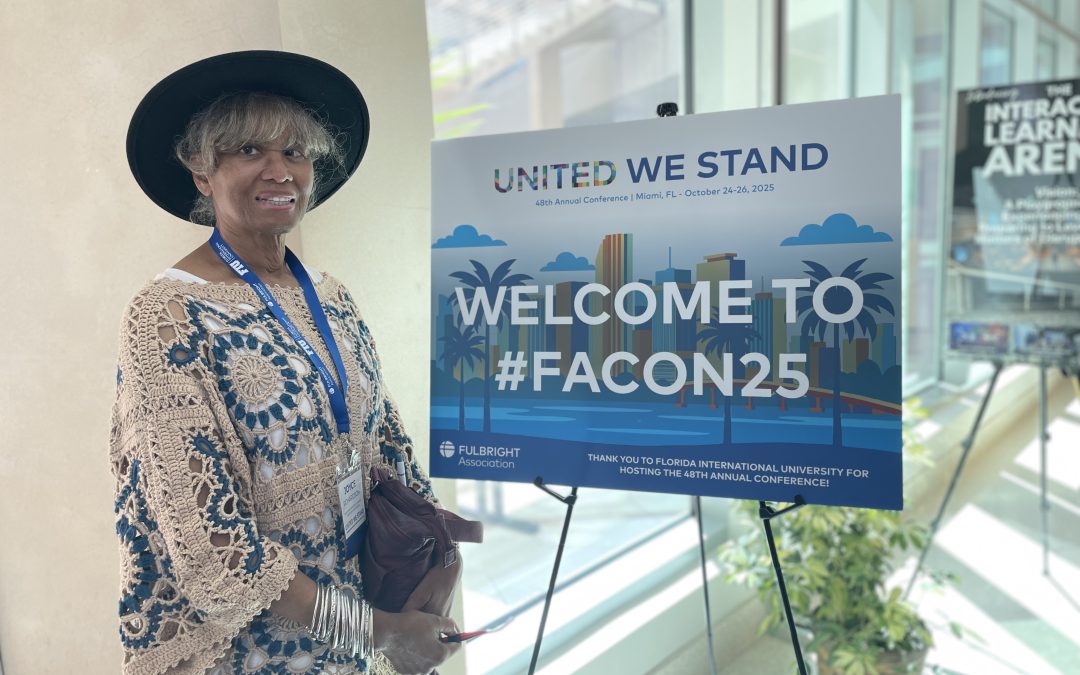
NJ Fulbright Chapter member Dr. Donnellan hosted a table talk discussion at the 2025 Fulbright Conference titled, “Extending the Fulbright Impact: Post-Award Collaboration and Virtual Internationalization using Collaborative Online International Learning (COIL).” The...

FULBRIGHT Association NEW JERSEY CHAPTER invites you to an afternoon of fun, food and & cultural discussion at Jenny Jump State Forest Shelter #8 330 State Park Rd. Hope, NJ 07844 Date: August 17 Time: 3-5 pm Jenny Jump State Park is home to the Greenwood...

Welcome, Dominic Nashkov!

The Ukrainian family our chapter has sponsored, the Nashkovs, are thrilled to announce the birth of their baby boy, Dominic—a new US citizen! He was born January 23. He weighed in at 6 lb., 6 oz. and is 19 inches ”tall.” He and Mom Valeriia are doing well. The proud...

Holger Henke Ph.D. Shares his Experiences as a Fulbrighter in England and Scotland

Fulbrighting” through England and Scotland

Holger Henke, Ph.D.

The following reflections were originally published in the York College (CUNY) Academic Affairs Newsletter (Vol. VII, No. 6) in October 2013.  Since then, many new trends and developments would require additional commentary, data, and reflections.  Perhaps most significantly, Britain opted with its Brexit to leave the EU, which affected and changed numerous immigration, internationalization, and other education-related aspects. Similarly, the United States has increasingly become an epicenter of de-globalization.  The article must be read with these changes in mind.  A comprehensive re-write of the text did not seem useful, practical or necessary, as relevant conclusions and inferences can still be drawn by most readers, especially those who are reflective practitioners in higher education.  However, a few minor updates and readability edits were made to the original text.

Sometimes life provides surprising opportunities to do things for a second time, when one might not have expected to have such a second chance. Many years ago, as a teenager, I visited Edinburgh, Scotland, and then left in the firm belief that I would likely never again get back there.  When I was selected for a Fulbright International Education Administrator US-UK award in early 2013 I quickly realized that among the eleven top UK universities our group would visit, the University of Edinburgh was included.  Thus, Edinburgh became a travel destination forthe second time in my life. Apart from Edinburgh, the three weeks of intense discussions, workshops, presentations, and cultural excursions took us to Imperial College, Royal Holloway,East Anglia, Sussex, Durham, York, Aberdeen, among otheruniversities.

INTERNATIONALIZING HIGHER EDUCATION

International education – it should be noted – has grown exponentially over the past decades.  In fact, a recent report by the British government states that it is likely “for numbers of international students in higher education to grow by 15-20% over the next five years.

In the United States, the numbers of international students grew by 5.7% to 764,495 during the 2011/12 academic year. However, as percentage of the total US student population, the international student population has not grown over the last 10 or so years. Also, while many rightfully argue that the future of the university comes in the guise of the “globalized university,” it is noteworthy that the US share on the international student market has dropped by around 5% between 2000 and 2005. Even while in absolute terms the numbers of international students are about 32% larger than they were in 2001 (contributing $21 billion to the US economy), this loss of international market share should give rise to concern since, as NYU’s President John Sexton put it aptly in the October 2012 issue of Scientific American, themeasure of a nation’s creativity is determined by the extent of its global science outreach and – may I add – its cumulative global scientific relevance.

International students are also likely to become a more significant factor for universities and colleges as in many places the supply of domestic students is stagnating or even declining. The share of British universities in the international student market has fallen from 16% (1998) to about 12% (in 2006 and 2007), even while the numbers of international studentscontinued to grow during that period. British universities earn a significant part of their income through foreign students and have in the last 10 or so years embarked on a very deliberateeffort to increase their share of international students (i.e., students from outside of the European Union). Thus, forexample, the number of international students at the University of Sussex grew from just over 500 in 2007 to over 1,600 in 2012. Similarly, at Robert Gordon University in Aberdeen the number of international students amounts to about 10-12% (ca. 1,500).

Scottish universities depend on international students for about £300m of their £3bn overall income.  It may not be a very fruitful enterprise to attempt a direct comparison between two systems that evolved out of their own unique history, respond to the needs of a particular sociocultural and economic context, and are embedded in their own specific political culture. Still, the (reasonable) expectation for this award was that we could learn from each other’s best practices and virtuous cycles. Thus, the Fulbright award aimed to give our group of US college administrators an opportunity to explore best practices and experiences with international students and study abroad programs in Britain, as well as to share our knowledge with counterparts in the UK.  It was, of course, also a chance to establish institutional connections with colleagues and programs in England and Scotland.  Finally, there was an opportunity to compare societal, cultural and institutional differences between teaching and research institutions in the US and the UK.  The program was tight and intense; there was indeed precious little – perhaps too little – free time built into the program.  Included in our group were 19 other administrators of study abroad programs, student development, or academic affairs divisions from various larger and smaller public and private colleges and universities.  All of them professed a passion for study abroad opportunities and care for students coming from outside of the US.  Their enthusiasm and professional and personal experience as educators were palpable, and already at the end of our first day a sense of mutual recognition and camaraderie began to emerge.  As we traveled along, it became clear to me that with regard to the CUNY system (as well as other large university systems) this particular program could be of particular value to administrators in the central administration, since the exposure to practices at some of the very best universities in the United Kingdom is really an eye-opener at many levels.

HIGHER EDUCATION IN ENGLAND AND SCOTLAND

Our first leg of the journey carried us to Norwich, northeast of London, to the University of East Anglia (UEA), an institution established in 1963 which has begun a significant journey towards internationalization and improvement of its national and international reputation in several disciplines and courses of study. Indeed, UEA ranks currently as number one in Britain in terms of student satisfaction. Responding to my question what the practices would be leading to this outcome, the Director of Internationalization, Richard Harvey, revealed that care about and responsiveness to student concerns and issues simply is a deeply engrained culture at all levels of the university where faculty and staff colleagues will hold each other responsible and accountable for all student issues.  However, student satisfaction is increasingly a significant measure that British universities are evaluated by, and so UEA must be doing a particularly good job at it.

Visiting the spectacularcampus of Royal Hollowayoutside of Central London

Since the British government raised tuition a few years ago to a now rather significant £9,000, universities are experiencing a more customer service-oriented and -intensive student population that requires adjusting to.  As part of their very deliberate strategy of internationalization, we witnessed significant amounts of dedicated staff (including the maintenance of overseas offices) at virtually all our host universities, who are organizing study abroad programs and recruiting aggressively in places such as China, India, South Korea, or Japan. In fact, it seems that the largest cohort of foreign students is from China.  Given this obvious emphasis on China and Chinese students, however, the question arises to what extent one can really speak of a true “internationalization.”

Offering and promoting diversity and internationalization is not automatically a productive venture; they require being pro-active and strategic. At one of our stops, we learned that, according to a study, only 15% of Chinese students in the UK have British friends. Furthermore, there can be an expectation that once China has satisfied its internal capacities in excellent research graduates, it may turn inward and begin to educate its students back at home, thus drastically reducing this pool of international students to UK universities.  There is a challenge as well in getting British (and Scottish) students interested in the inherent benefits of a study abroad experience.  As only 1% of UK students are choosing an academic program because of its study abroad opportunities, the challenge is to be very intentional at offering these opportunities and at internationalizing the curriculum, as well as the appropriate student support services.

Because of the challenges stemming from a one-sided internationalization strategy, many universities are stopping active recruitment in China and are diversifying their foreign intake sources – a strategy that is slowly beginning to show results.  The University of Edinburgh, for example, is becoming much more proactive in recruiting in Latin American, India, and other regions.  At the University of Sussex, 25% of its students are international students and its academic staff comes from over 50 countries. These figures are typical for several of the institutions we visited. However, internationalization may also – like at Sussex and the University of East Anglia – include degree requirements including compulsory study abroad semesters for all undergraduates in certain degree programs.  

Attending a meeting at Imperial College

Like British employers, the universities are concerned in inculcating transferable skills, selfconfidence, and foreignlanguage competencies in their students. For example, according to one study cited to us, 47% of British employers are dissatisfied with university graduates’ international culturalawareness; 55% are dissatisfied with their foreign language skills.  International education is thus seen as a critical and strategic way of attaining these skills.  However, as mentionedbefore, many British students are not easily convinced of thebenefits of learning a second language, acquiring valuable softand transferable skills, and gaining intercultural competence. In part this has to do with relative costs of an overseas education, and lack of financial support, but also with a relative lack of interest in working outside of Britain or outside theCommonwealth.

This may seem surprising, since Britain is a diverse country withquite long-standing and intense relations with many countries within and beyond the boundaries of its former Empire, and because it has a globalized economy.  But perhaps one should not be too surprised because it is also a country that maintains notions of “splendid isolation,” as evidenced in the survival of the British Pound (rather than adoption of the Euro) and Prime Minister Cameron’s recent public question of whether it should remain an EU member.  At the University of Birmingham’s Shakespeare Institute (in Stratford- upon-Avon), its director was also hardpressed to respond (and really did not provide a very satisfying answer) to my challenging question regarding the extent to which the Institute’s research considered thedevastating impact in many British colonies which the teaching of Shakespeare (and other British “classics”) as the literary norm had on the recognition and development of indigenous language and literary traditions.

To help “market” the transferable skills, many universities – through their career centers or student development services – have become very intentional in assisting students with the articulation (e.g., in their CVs) of the skills they obtained duringstudy abroad experiences.  Employability was greatly emphasized by many of the universities we visited – in particular, at Robert Gordon University (RGU) in Aberdeen and Edinburgh University.  We were pleasantly surprised to learn that RGU continues to provide career support to its students even years after their graduation!

Also, RGU establishes and maintains especially close relations with industry partners to provide guaranteed internship opportunities to its students.

CUTTING EDGE RESEARCH AND TEACHING

During our visit we encountered many cutting-edge innovations, clever marketing techniques, and an impressive allocation of resources to international student recruitment, study abroad opportunities for British students, globalization of research and curriculum.  Many lessons are to be learned here.  

Dr. Richard Clay (University of Birmingham) demonstrating super-sized touch-table technology in his lab.

Imperial College dazzled our group with its stellar accomplishments as a research institution, while University of Sussex impressed us by its location as the “London by the sea” and its vibrant cultural environment attracting students interested in traveling northwestern Europe while getting a solid degree from a highly reputable research institution.  The development at Imperial College (which is a university) of a surgical knife which during the actual surgery analyzes the tissue it is cutting in real time – and so, for example, can distinguish between cancerous and healthy tissue – will forever change how medicalstudents learn surgical procedures.  The University of Sussex in Brighton – as all institutions we visited – has embarked on a deliberate strategy to attract and diversify its body of international students. In this effort it presents itself as a dynamic research institution located in a vibrant and diversecommunity at the doorstep of mainland Europe.  It also prides itself on its interdisciplinary focus in research.

At the University of Birmingham, located in Britain’s second largest city, our group of Fulbright awardees was introduced to the future of the 21st century classroom.  Dr. Richard Clay, co – director of do.collaboration demonstrated a relatively new technology – touch-tables – that will impact the way researchwill be displayed in museums, laboratories, and in the (global) classroom. In a nutshell, we were shown an approximately eight by six feet wall-mounted “tablet computer,” on which research objects are displayed and can be blown up in size, be edited to have explanations added to them, and be distributed to other satellite screens along the wall of the classroom/lab. These satellite monitors may serve as workstations for student group work and can be outfitted with technology that makes them interact with smart phones. These interactive technologies lend themselves to all kinds of collaboration in the classroom, through the internet, and can actually engender new research fields and disciplines.  In fact, Dr. Clay invokes the notion of “postdisciplinarity.”

Also, the new way to display graphics as super-magnified high-resolution imagery may lead to new research collaboration (say, for example, between historians and art historians).  As he explained, attention to minute details in historical documents displayed on screen, which hitherto escaped the attention of historians, has already led to new findings and research projects.

The University of Edinburgh’s Global Academies with theirmulti-disciplinary Masters programs (some of them online) presented another intriguing model for the further globalizationof curriculum and research. Through its Global Academies Edinburgh delivers a series of study programs that are multi-disciplinary, have a global focus on the greatest challenges facingus today, work in partnerships across academia, commerce, civilsociety and local communities, and engage in novel teaching and research practices across the university. Study programs, some of which are also delivered as online modules, can lead to postgraduate certificates (e.g., in global development challenges, in African and International Development), to Masters degrees (e.g., in Global Challenges, in Science Communication and Public Engagement, in Global Health and Infectious Diseases, inPublic Health, or in Clinical Education), and even to a Ph.D. (in Global Health). The Global Academies also allow for independent research opportunities. Thus, for example, the Academies currently offer a “Peacebuilding Through Media Arts” research project, a “Crossing global health boundaries” project, and a “Safer water in West Africa” research project – to mention only a few examples.  Without doubt, Edinburgh’s Global Academies are a visionary educational undertaking, allowing for significant flexibility to accommodate a variety of internationalization projects under a larger umbrella.

BUT: INTERNATIONALIZATION WITHOUT DEEP DIVERSITY?

However, what struck many of us already towards the middle of our tour – a sentiment that was finally voiced and discussed at our last stop at the University of Edinburgh, when a number of key Scottish policymakers sat at our table – is an egregious lack of diversity among the international office personnel and study abroad officers whom we met, as well as among the university executives we encountered. With representatives from Universities Scotland, Scottish Development International, and the Scottish Government International Division (Education) in the room, I made it explicit that as a city, as an institution, or as a country bent on internationalization, that very same internationalization has to be modeled and embodied by all the committees and offices being representative of and for it, and that as a group we did not witness that internationalization and deep diversity during our visit.  Given Britain’s long-standing social and ethnic diversity, there is a glaring discrepancy between the rhetoric of “internationalization,” “engagement with global communities,” or “intercultural competence” and the relativehomogenous demographic of our British hosts.  In fact, I would argue that it is an obvious limitation of the British university system’s strenuous efforts at internationalization.

Visiting various historic sites – suchas here in Edinburgh – was an integral part of the program

Our hosts were at pains to explain that concerns with diversity inBritain revolve more around providing access to higher education to socio-economically underprivileged strata, than around concerns of a diversification away from its white, heterosexual, and male-dominateduniversity system. And then, almost as a sidebar, we were told by Mr. Alan Mackay (Deputy Vice Principal International), that in the very room we are meeting just recently he had to face a group of agitated foreign students accusing the university of racism. Quite obviously some of the blame lies with the(increasingly) restrictive migration policies of the British government, which continuously seems to respond to populistsentiments and send questionable signals – for example, the earlier mentioned recent remark that Britain might considerleaving the European Community. The Fulbright group left our colleagues – who profess an awareness of their limitations – with a clear charge that global engagement must be modelled at all levels through various affirmative action and equal opportunitytools and cannot just be performed or mimicked.  As we visited exclusively some of the top research institutions in Britain, we were also becoming aware of the relative dearth of pathways in the British system for access to higher education for disadvantaged and underrepresented groups.

As well, the already mentioned relative concentration of international student recruitment on one or two major contributing countries must be interrogated regarding its long-term viability and its benefits for other students. As a countrythat is struggling to a greater extent than the United States (although we certainly do have our share of issues and problems) with immigration and diversity, and which has an ambiguous relation to its role within the European Union, questions need to be asked (and answered) as to who benefits from the presence of international students in Britain, and to what extent international students are allowed to make contributions to the British economy and society.

For CUNY, as international as it is already (York College alone has students on its campus from over 150 countries, many of whom are first, 1.5th, or second generation immigrants) and as much as it is an integral part and leader of New York City’s higher education-scape, my Fulbright summer embedded in my mind that as a university system it could yet do more in terms of international student recruitment. To begin with, it is a huge and growing market. Next, our location is unmatched and – even for international students – its tuition is highly competitive, as are itsdegrees. The challenge is to go out, recruit, and facilitate international students prior and during their arrival at CUNY – i.e., to develop an international student recruitment strategy. I would like to think that this is a conversation it would be worth having at the University’s central administrative level.

ENDNOTES

TES

1 International Education: Global Growth and Prosperity, (HM Government), July 2013, p.6.

2 Throughout this article I am relying on a number of statistics that were shared with us by various

institutions we visited. In addition, some statistical figures and/or background information were drawn from:

a) “2012 Open Doors” report, Institute of International Education, November 12, 2012 – see

www.iie.org/en/Research-and-Publications/Open-Doors;

b) c) James Cemmell and Bahram Bekhradnia, “The Bologna process and the UK’s international student market,”

Higher Education Policy Institute, 2008, see – www.hepi.ac.uk/files/36Bolognaprocessfull.pdf;

Phil Vickers and Bahram Bekhradnia, “The Economic Costs and Benefits of International Students,” Higher

Education Policy Institute, 2008, see – http://static-71-166-250-

129.washdc.east.verizon.net/eLibrary/ARCHIVES/GENERAL/HEPI_UK/H080521C.pdf.

3 See also www.youtube.com/watch?v=nJ4VqEQb1io.

4 See also https://uoe-global-health.ed.ac.uk/our-people/global-academies-and-international-deans.


The Abaya Chronicles


The NJ Fulbright Chapter has encouraged its members to
pen articles that highlight their experience as Fulbrighters.

Dr. Tina Lesher, professor emerita of journalism at William Paterson University, here details the interesting time she had as a 2006-07 Fulbright Scholar in the United Arab Emirates.

In 2001, I spent a semester as a visiting professor at Zayed University, an educational institution that had opened in 1998 with non-residential campuses in Abu Dhabi and Dubai. The university’s mission was to educate the top female students in the UAE with the hopes that they would become leaders of their country.

During my tenure at the Abu Dhabi campus, I had an opportunity to learn about the history of the area, especially the years before the UAE was founded in 1971. Life on the desert for the women my age—I was born in 1943—was extremely difficult. The infant mortality rate up to the 1960s was more than 50 percent.  Living in tents or mud houses proved hard for women, many of whom died when they were young mothers.

But by the time I was in the UAE in 2001, the surviving women my age (many in their early 60s) were living a first-class life—most residing with their families in lovely villas staffed with domestic help from overseas.  

I often thought how interesting it would be to use my journalism background to interview Emirati womenand see how their lives had changed over the decades.

And I had that opportunity when I was named a 2006-07 Fulbright Scholar to the United Arab Emirates. Sofive years after my first stint in the UAE, I was back—this time as a Fulbright Scholar. Amazingly, when Fulbright appealed to a number of UAE universities to host me, a response came immediately from Zayed University and I returned to the same campus where I had previously taught.

And I might note that, despite the fact I was not eligible that year for a paid sabbatical, William Paterson University, where I was a full professor, paid me the difference between what Fulbright provided in funds, and my salary for the year. I will always salute the university board of trustees for that vote!

Fulbrighter in the UAE    2006-07

While Fulbright Scholars have a choice to research fulltime, teach fulltime, or do some of both in their assigned country, I chose to teach half-time at Zayed University and handle my interviews/research for the other half of my award.

Zayed University had changed dramatically from my first outing as a visiting professor in 2001. At that time the university was but in its third year with no senior class. I was called Miss Tina, apparently because that was how students had referred to their teachers in earlier grades. Students had to be at school all day, from 8 a.m. to 5 p.m. even though they did not have classes much of that time. Frankly, in my opinion, ZU operated more like a high school.

But, when I returned for my Fulbright stint starting in the fall 2006, ZU was a full-fledged university.  As in the US, students needed to be on campus only for their scheduled classes. Now I was called Dr. Lesher, no doubt because the university was seeking American accreditation and a title of Miss Tina might not seem too professorial.

I knew, from my previous stay that it is hard for foreigners to meet Emiratis.  Thankfully, when I told my students that I was in the country to interview women of all ages, but especially older ones, the girls started commenting out loud: “You can interview my grandmother. I have a neighbor who would be willing to be interviewed…”

So gradually, through colleagues and others, I met many Emirati women whose lives proved interesting.

Some of my initial interviews were with Emirati women in their 20s, most with college degrees in a country that wanted to ensure that females had every chance to secure higher education.  Most of these women were single.  That was much different from their grandmothers, who married as young teens. After all, Muslim men could have several wives as long as they were treated equally—not a difficult assignment in the days of desert life. But by the 1990s and later, things had changed.  Weddings cost a fortune—literally—and the groom or his family paid for these elaborate fests.  So having more than one wife was near impossible, even with some financial help from the country’s Marriage Fund.  Also, women were expected to wed Emirati men, while the men could marry women from other countries and many did so to avoid the extravagant cost of Emirati weddings.  Thus, the chances of UAE women meeting their Emirati life partners dropped considerably.  Yet, I learned that educated single women were securing high-paid jobs and living life to the fullest.

Throughout the Fulbright year, I had the chance to meet extraordinary women in the UAE. Some of these interviewees included:

The national women’s golf champion, a banker by profession.  She enlightened me when she said a married woman can retire after 15 years with a government pension but a single woman such as she had to work 25 years before retirement. She also invited me to play golf on a dirt course!
A high-ranking female in the UAE Army: she holds a doctorate in pharmacology from a Cairo university and was responsible for purchasing all medical-related items for the Army.
An American woman, married into a ruling family from one of the Emirates, who was in charge of a large research undertaking that employed a number of young Emirati women whom I interviewed.
A dentist from another Middle East country who was married to an Emirati man from a well-known family
A professor who was one of the female members of the Federal National Council and invited me to tour the FNC Building
An Emirati woman—my age—who grew up in the desert, married at 14 and had 14 children, four of whom died at birth or in accidents when they were young.
A UAE University professor who had studied in the US as a Fulbright Scholar

The list goes on, but I also had some unique experiences that added to my interviewing research.  

For example, a sheikha member of the ruling family invited me to her palace to interview not only her but a number of other important Emirati women with whom she was friendly.  And the young sheikhas whom I taught were most engaging, and as I was to leave on my final day in the UAE, they gifted me with a lovely gown made especially for me by the palace tailors.

Another example: When I interviewed a woman who worked in a top job with the private schools in the country, she invited me to lunch along with a friend who was visiting from New Jersey. We had a delightful time and, as we were leaving, the woman took two framed pictures off the wall and gave one to each of us.   My friend, who owned beautiful pieces of art, was shocked and said the painting would always have a prime spot in her home. I seconded that!

Back in New Jersey

When I completed my year-long Fulbright and returned home, I gave a number of presentations about the women I interviewed and life in the UAE at the time. I even returned to Abu Dhabi a year later to speak and show a Power Point presentation to the American Women’s Club there.

A year or so later, a group of Zayed University students came to New York on a field trip and I helped escort them to various places. One day a student asked me why I had not written a book about the women I had interviewed and I said I would never be able to get permission from them to do so. Then one student piped up: Then write a novel!

And so I did. With a fellowship at Dairy Hollow writing colony in Arkansas, I was able to devote weeksin 2010 to penning The Abaya Chronicles, a novel based on a UAE-American family.  The book was self-published but was able to garner some support, including being named the best fiction book of 2011 by the National Federation of Press Women. I flew to Iowa for the award presentation.

In addition to serving a two-year stint as a Fulbright Ambassador, I became active in the Fulbright Association and was a presenter at one of its national conferences.  On the state level, I continue my involvement, currently serving as chapter secretary while heading some advocacy activities. With my husband, Dr. John Lesher (a Fulbright Friend), I twice have been a participant in Advocacy Day on Capitol Hill in DC.

In brief, my Fulbright experience has been consequential in my life, and I am honored to have been a recipient of the award.

The Princeton University Art Museum

Members of the NJ Chapter Board and guests had an impromptu get-together at The Princeton University Art Museum on Saturday, December 6, 2025.  This was followed by a light lunch at Winberie’s Restaurant on Palmer Square. A fun time was had by all!

Members of the NJ Fulbright Chapter Board with Guests at Winberie’s in Princeton